Smart Sensors
Reliable data, wireless simplicity
Displaid smart sensors introduce an intelligent, easy-to-install system, even in locations without a power supply. This solution system, even in locations without a power supply. This solution combines the data quality of a wired system with the flexibility of wireless technology, eliminating the need for hundreds of meters of cabling, without compromising the reliability of the collected data.
The benefits of adopting Displaid sensors

Plug & Forget
Engineered to operate for extended periods without maintenance interventions.

Efficient deployment
Designed for cable-free installation, independent from the electrical grid, with minimal traffic disruption

Data quality
Provided with metrological performance comparable to traditional wired systems, ensuring accurate and reliable data.
Wireless technology for fast and efficient installation
Displaid solution eliminates the need for cables, reducing costs and limiting traffic interruptions for a simple, quick, and reliable deployment. The system supports a scalable monitoring approach, enabling continuous and widespread control of the network for connected, safer infrastructure.
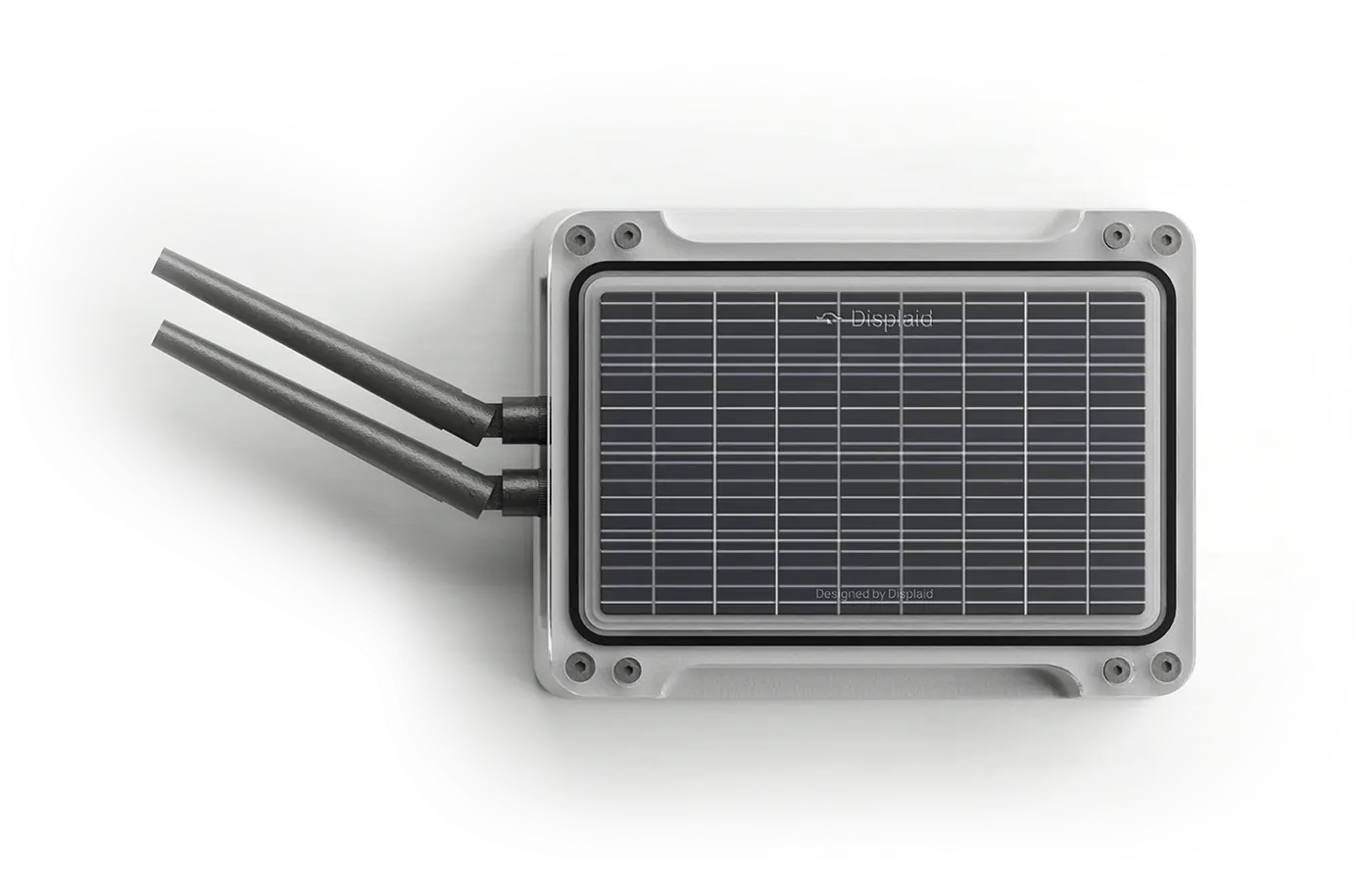
Energy autonomy for off-grid applications
Ultra-low power architecture and integrated solar panels ensure independence from external power, reducing installation complexity. Intelligent energy management, combined with self-diagnostic functions, guarantees reliable and continuous monitoring over time, with no maintenance interventions needed.
High-performance structural monitoring
The high metrological performance of Displaid sensors allows the detection of small variations in structural behaviour. Our data acquisition software, developed specifically for this type of monitoring, ensures synchronisation and performance comparable to traditional wired systems.
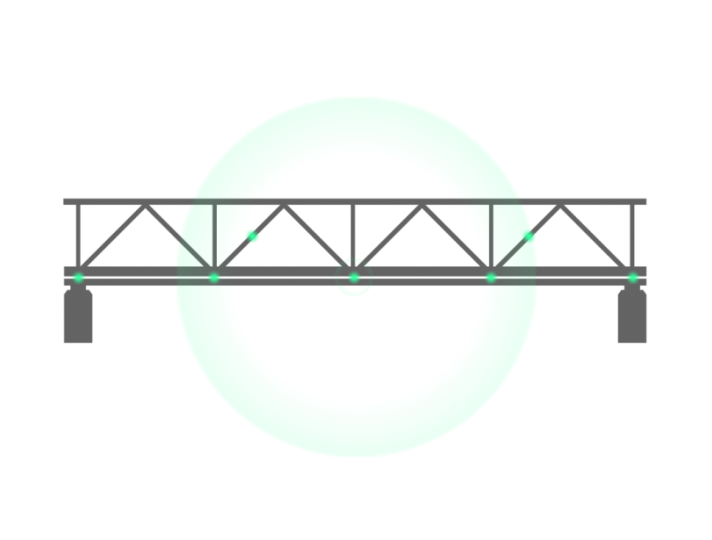
Custom design for simple and durable application
Each Displaid sensor is designed for long-term service continuity. Its compact, weather-resistant design simplifies installation and reduces vulnerability points, while the absence of cables drastically limits potential sources of failure.
Catalogue
Accelerometer
Tri-axial sensor synchronised at the micron level for modal analysis applications.

Tri-axial

Synchronised at 1.067 µs

Noise floor 22.5 µg
Tiltmeter
Bi-axial sensor for quasi-static rotation measurements over 24 hours.

Bi-axial

24-hours operation

Frequency up to 1Hz
LVDT
Linear displacement transducer, suitable for application to joints and cracks.

High thermal stability

Extension up to ±25mm
Frequency up to 1Hz
Want more technical details?
Get full information on the Displaid system and technical specifications of our smart sensors.
FAQ
Displaid in details
01-What types of sensors are used for bridge structural monitoring?
Bridge monitoring mainly relies on sensors capable of measuring dynamic and static behaviour. The most commonly used are accelerometers for vibration and dynamic response analysis, and inclinometers for monitoring slow rotations and displacements over time. Displaid sensors are specifically designed for Structural Health Monitoring (SHM) applications, offering high metrological performance and permanent installation capability.
02-Are wireless sensors as reliable as traditional wired systems?
Wired systems have long been the reference standard, especially for data quality. However, modern wireless solutions designed for SHM can achieve comparable, if not superior, system reliability. Displaid wireless sensors combine high metrological performance with significantly simplified installation, reducing common failure points typical of wired systems, such as cables and physical connections.
03-Are Displaid wireless accelerometers synchronised for bridge modal analysis?
Yes. Displaid wireless accelerometers are synchronised for bridge modal analysis without distorting results or estimated dynamic quantities. Proprietary synchronisation technology, developed and validated for SHM, ensures reliable temporal alignment even across distributed sensor networks. In the frequency ranges relevant for bridges, synchronisation performance is equivalent to traditional wired systems, while maintaining the operational advantages of wireless technology in terms of installation, cost, and flexibility.
04-How do structural monitoring sensors impact overall project costs?
Sensor cost is only a portion of total monitoring system costs. Traditional systems often incur significant expenses from cabling, auxiliary works, power supply, and installation. Displaid’s autonomous, wireless approach significantly reduces implementation costs, simplifies installation, and minimises traffic disruption, making structural monitoring more accessible and sustainable, even for large networks.
05-How are Displaid sensors powered, and what maintenance do they require?
Displaid sensors operate independently, even without external power. Ultra-low power design, integrated solar panels, and intelligent energy management ensure continuous operation with minimal maintenance. This “plug and forget” approach is ideal for existing bridges with limited accessibility, providing tangible value to asset managers.
06-Have Displaid sensors been installed and tested on real infrastructure?
Yes. Displaid sensors have been installed and validated on numerous real infrastructures, both in research projects and operational applications. The technology builds on years of academic research and field experimentation, with data collection on real bridges. This experience allows Displaid to offer mature, reliable solutions designed for continuous long-term operation.