Proprietary algorithms
AI-powered structural engineering
Displaid algorithms, developed at Politecnico di Milano after years of research, combine structural engineering and artificial intelligence to detect a wider range of degradation phenomena compared to traditional methods. Specific indicators and standardised models allow analyses to scale across the entire network, transforming collected data into reliable and representative information on asset health.
The benefits of Displaid algorithms

360-degree monitoring
Capable of identifying all major causes of damage for each typology of bridge.

Scalable approach
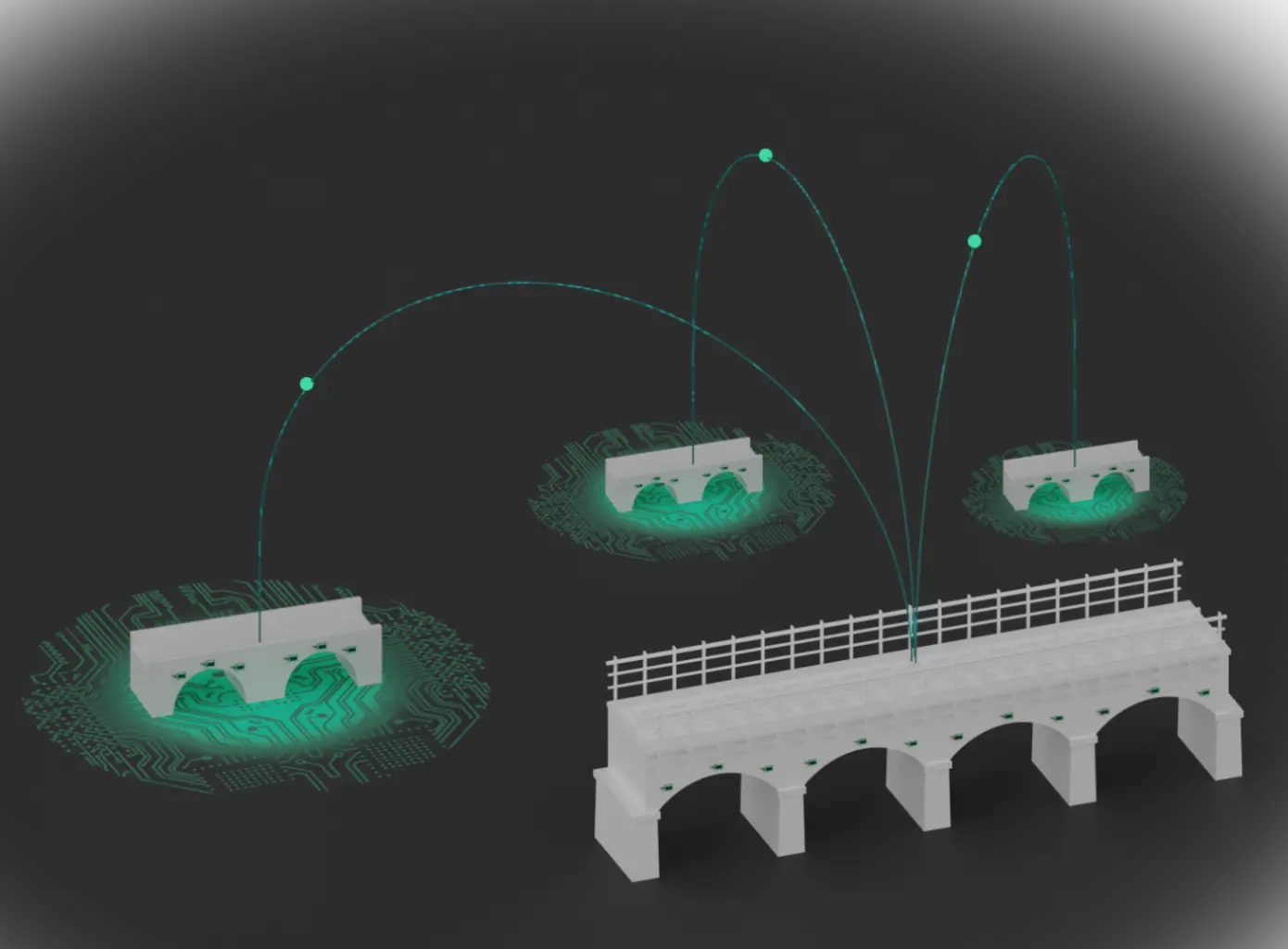
Analyses can be replicated across multiple bridges of the same type, leveraging an AI-enhanced approach based on structural archetypes.

Plug & Play application
Flexible integration with third-party systems and automatic processing of data, including pre-existing datasets.
Damage indicators tailored to each degradation phenomenon
Each indicator combines heterogeneous data to monitor a specific damage mechanism potentially critical for a given type of bridge. Displaid algorithms transform these data into detailed, immediately interpretable information, directly linked to structural behaviour and local phenomena.
Advanced and automated modal analysis
Displaid’s OMA algorithm uses machine learning to initialise and optimise modal identification parameters automatically. The removal of exogenous, including non-linear, effects enables accurate temporal tracking of the dynamic characteristics for each bridge typology.
AI integration within engineering models
Displaid algorithms combine engineering models and artificial intelligence to filter out external influences such as traffic and temperature, and to interpret complex behaviours with a data-driven approach. As more data are collected, the models improve and transfer knowledge between similar bridges, enabling increasingly reliable and scalable network-wide monitoring.
Already installed monitoring systems?
We can help transform your existing data into clear, actionable insights
FAQ
Displaid in details
01-What scientific research underpins Displaid’s data analysis algorithms?
Displaid’s data analysis algorithms are based on years of academic research in structural engineering and infrastructure monitoring, developed in collaboration with Politecnico di Milano. The methodologies draw on scientific studies, international publications, and field experimentation on real infrastructure. This ensures each algorithm is grounded in solid engineering principles, adapted and validated for operational structural monitoring of bridges and viaducts.
02-Have Displaid algorithms been applied and tested on real bridges and networks?
Yes. Displaid algorithms have been applied and validated on numerous real bridges and infrastructure networks, both in research and operational projects. Large volumes of data collected over time have confirmed algorithm performance under real and variable conditions, enabling Displaid to offer mature, reliable solutions for continuous infrastructure management.
03-How does Displaid use AI in structural bridge monitoring?
Displaid uses AI to support engineering, not to replace physical models or technical expertise. AI analyses large datasets, detects significant variations in structural behaviour, and enables scalable monitoring across extensive networks. Displaid algorithms identify recurring patterns, reduce the influence of external factors like traffic and temperature, and improve analysis stability over time. All models are integrated within a transparent engineering framework, with physically interpretable indicators linked to structural response mechanisms.
The AI approach is not a black box: every result is verifiable and subject to dual algorithmic and engineering control, ensuring traceability, physical consistency, and reliable information for asset managers.
04-How do Displaid algorithms differ from traditional analysis methods?
Displaid algorithms systematically cover the main damage mechanisms relevant to each bridge type, going beyond simple global behaviour observations. Unlike conventional approaches, which often struggle to interpret non-linear effects induced by traffic, temperature, or variable environmental conditions, Displaid combines engineering models and AI to separate these effects from signals attributable to actual degradation. This allows not only anomaly detection but also the identification, localisation, and interpretation of damage phenomena, linking them to specific structural elements and physical mechanisms. The result is more reliable, time-comparable information that directly supports targeted inspections and maintenance planning.
05- How are monitoring data transformed into actionable insights for asset managers?
Sensor data are processed through algorithms that convert them into synthetic indicators directly linked to specific structural damage mechanisms, such as foundation scouring, corrosion, or bearing deterioration. This information is presented clearly and understandably, supporting operational decisions. The goal is to transform raw data into actionable insights to plan inspections, prioritise interventions, and manage the infrastructure lifecycle more efficiently.