On the performance of data‑driven dynamic models for temperature compensation on bridge monitoring data.
Autori:
Abstract:
In Structural Health Monitoring, environmental and operational variables present a persistent challenge. These variables induce fluctuations in measured data, consequently reducing the system’s sensitivity to detect anomalies. Local temperature stands out as a significant external factor in bridge monitoring, which can be accounted for and effectively compensated through data-driven modelling. The literature offers numerous algorithms to model the complex, often non-linear and timevariant relationship between temperature and measured responses. This work aims to test the algorithm of Sparse Identification of Nonlinear Dynamics with Control on SHM data, with the objective of finding a more flexible, interpretable and noise-robust solution to the issue. We compare its performance against the Auto-Regressive model with exogenous inputs and the static linear regression. Our comparative analysis focuses on displacement signals from two distinct data sets, acquired from a steel Warren truss bridge and a reinforced concrete bridge equipped with a resident monitoring system. Unlike many existing studies, this research also examines the models’ robustness against noise and their accuracy for predictions that span long time horizons. The numerical results from Sparse Identification of Nonlinear Dynamics with Control are promising, showcasing accurate predictions and robustness against noisy state variable data. In contrast, the Auto-Regressive model with exogenous inputs model and linear regression exhibit difficulties in noise rejection, one for noise in the initialization phase and the other for noisy exogenous inputs. This may significantly impact their performance if used in Structural Health Monitoring applications.

Paper correlati
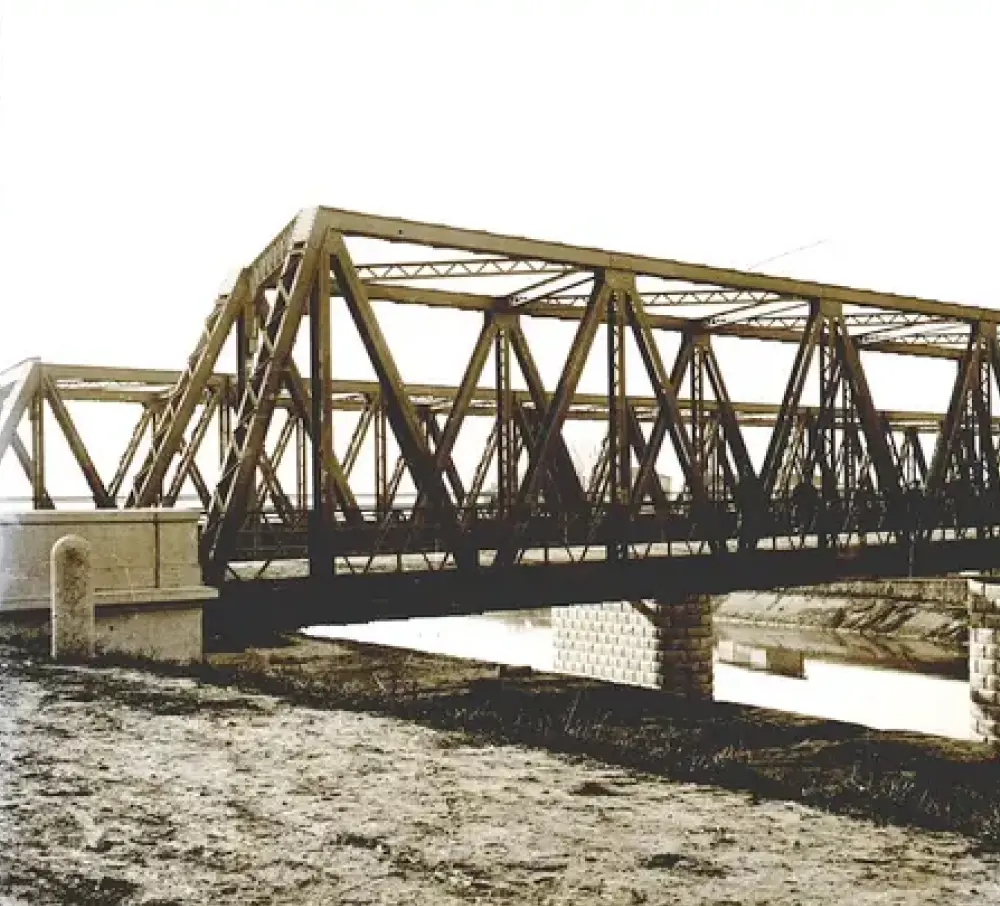
An automated algorithm for experimental OMA: application on a Warren truss railway bridge with a permanent monitoring system
In the attempt to move towards time-efficient and cost-effective condi-tion-based monitoring of transport infrastructures...

A new methodology to detect corrosion on steel truss railway bridges exploiting local strain gauges: Analytical, numerical, and experimental validation
Steel truss bridges suffer from ageing deterioration phenomena, among which corrosion is the most critical...

A Deep Learning Approach to Detect Failures in Bridges Based on the Coherence of Signals
Structural health monitoring of civil infrastructure, such as bridges and buildings, has become a trending topic in the last few years...

SHM campaign on 138 spans of railway viaducts by means of OMA and wireless sensors network
Condition-based monitoring applied to railway bridges represents a topic of major importance and interest among developed countries, such as Italy...